|
Gustav
|
|
|
Interview
by Eric Tobey
|
This
interview was taken from the Die Neue Feldpost newsletter
& was done so with permission of the publisher.
We would like to thank him for his generosity as well
as thank all those who have contributed to this
article. It is with their efforts, we are able
to share this valuable research with the rest of you.
The
following interview was conducted on April 12, 1992,
and the veteran was the ex-father-in-law of my
Alsatian room-mate. The veteran and his family
had traveled to the US for a visit before my room-mate
was planning on going back to Alsace for good.
Although my room-mate was very hesitant about the
meeting I proposed, when the time came the veteran was
more than willing to talk; in fact, he was literally
bubbling over with recollections. The veteran
had no qualms about even using his name in this
article; the absence is due to the request of my
room-mate. The hardest thing about this
interview was the fact that Gustav spoke very
little English, German, and the Alsatian dialect.
Some of the hard-to-follow passages are probably due
to bad translations on my part.
How did
you enter the German Armed Forces?
I was a drill grinder in a small factory in
Mulhouse. The Germans called this city Mülhause.
It was the main city in Alsace, which was French
territory at the time. Alsace is the region
between the Vosges and the Rhine River. My
wife's family were inn-keepers and we lived over the
inn. The Germans came in 1940, it didn't matter
too much because this type of thing happened every so
often to Alsace. Germany, then France, then
Germany, then France again. My son was born in
November 1941. The Germans made us give him a
German name. My wife wanted to name him after
her father Gerard, but we had to name him Bernhard.
While I was working hard in the factory, my wife was
messing around with the German officers who came into
the inn. One day I came home and one was sitting
in my parlor chatting to my wife. Nothing bad
about this. I went into my bedroom to change my
clothes and found his cursed hat on my wardrobe.
I went into the kitchen and threw it into the
wood-stove, then ran out the door. He was
walking down the stairs towards the inn. I
pounded him to a pulp (gefügig machen).
Next morning they arrested me and threw me in jail.
This happened in January of 1943. In March or
April I look out and see this Waffen SS officer
looking into the cells. He walks into my cell.
He looks at me and smiles: I was 180 centimeters tall
(about 5' 11"), blonde hair, blue eyes, lots of
muscles. Just what they wanted. He looked
magnificent too, with a leather coat and smart uniform
and gloves. He says, "would you like to get
out of here?" Of course I said "Yes,
yes!" He says he could get me out to join
the Waffen SS, and said jail was no place for a strong
German man. He asked me if I would fight
the Bolsheviks. Of course I said "Yes,
yes!" I wanted to get out of there.
Then I was off to a camp near Prague in
Czechoslovakia.
Tell me
about your training.
Once we were having an inspection (Appell).
One of my tunic pocket buttons was not sewn on tight
to my uniform and was hanging down by a thread.
Those buttons were never sewn on tight enough, you had
to do it yourself. The Oberscharführer came up
to me and said, "you are not in order."
I said that I didn't think that one thing really
mattered. Now he yells at me "Think? You
are not supposed to think! We leave the thinking
to the horses because their heads are larger than
yours!!" After this camp I went to the Ostfront.
What
unit were you in? What was your job?
I was in the 3rd Kompanie, Deutschland Regiment of
2nd SS Division. The name of the division was
"Das Reich." This is a very famous
unit in France. In the summer of 1944, some of
them killed some people in the Gascogne and around
Limoges (in France). To this day there are some
places in France where they still do not like
Alsatians because of this. Today, Germans take
holiday in these parts, but Alsatians are not always
welcome...
...I
carried the tripod (Dreibein) for a machine
gun.
What
happened to you on the Eastern Front?
That winter the Ivans were laying guys low (umlegen)
one after the other. We were really getting
pounded. Bad weather too. Then they began
to transfer a lot of the people from our division back
to France for a vacation. But not us. They
said it was because we had not been there as long as
some of the others, but we knew it was because we were
Alsatian. They took the Germans out, and left
the Alsatians, the Czechs, and so on...
Then there
was a big attack. The Red Army scattered us.
I threw away my pistol and equipment and hid in the
freezing water under a bridge. The Russians
marched over the bridge. I came out and headed
for safety. Then big shells started coming down:
Psssshhh TOOM! I thought that I was done for.
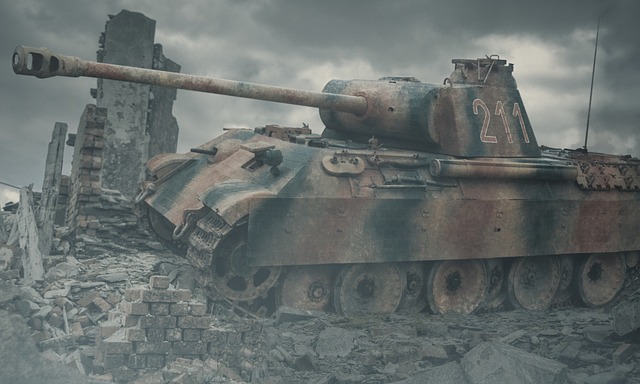
Then a Panzer stops and a guy waves me over, tells me
to get in. I got in, and then the Panzer gets
hit and wounds me badly. My whole side and one
leg were all torn up. The Panzer men pulled me
out and took me to the Hospital. Then I went
right back to Prague in Czechoslovakia, almost the
same place that I started. Close to the end,
they moved all the patients to a camp in Austria.
Where
were you when the war ended?
Still in the camp in Austria. I'm hobbling
around outside on my crutches when the French army
came into the camp. A tank pulls up, the hatch
opens and a man comes up. He says in Alsatian:
"Gustav, is that you?" It was my
sister's boyfriend André, he was in the French Army.
He recognized me, but I did not recognize him.
He knew where to find me. He took me to his
commander who said, "what the devil do you think
you are doing in the SS? Keep your mouth shut or
you might regret it." Then they sent me
straight home. I was lucky, some men spent a
long time in French prisons...
When I got
back, the inn where I lived was in ruins, my relatives
were living in the cellar. It was very wet and
cold there. My son had died of a lung infection
because of the living conditions. My wife was
gone, she had gone to Germany before the Allies had
come. I didn't know any of this, because I
hadn't gotten any mail after the liberation. I
tried to find my wife for years after the war, there
is a Suchdienst in Bonn who will help you find
missing people but we never found her. This made
it very difficult to get a divorce. I think she
may have died in Berlin in 1945.
I was so
depressed, everything was ruined. I had to keep
quiet about what I had done during the war. But
my grandmother always said, "Kopf Vor!"
(heads up). You can get through almost anything.
You still
have to be careful with your war service in France.
They have reunions (of the 2nd SS) but I never went to
one. My friend had a good government job until
he went to a reunion and someone found out; he lost
his job. If some of my customers found out, they
probably wouldn't do business with me.
How
were Alsatians treated in the SS?
About the same as anyone else. There were a
lot of non-Reich-born men in the SS. Sometimes
they criticized our dialect, though. I don't
have any trouble understanding German, but sometimes
its hard to speak it like a German. I felt sorry
for some of the Czechs, some of them spoke better
German than I, but some of them could barely
understand what you said to them. For some
reason the Germans thought that the Czechs made better
soldiers than the Alsatians; they were likely to
promote them first. You would meet Army troops
and they would say "Oh ho! The SS has got
the Alsatians! Good! They can have you.
We don't want you!" And of course the NCOs
would yell at everybody. We would be sitting in
a woodlot after barely saving our skins from the Ivans
and they would come up and yell "Get up, you Faule
Hünde (lazy dogs)! Get to work! Build
positions!" That's what they would call us
- Faule Hünde. Ha ha.
What
kind of food were you given in the SS?
Have you ever had Frontkameradensuppe?
Sometimes we still eat it for nostalgia. It is
made from beans, potatoes, and ham all boiled
together. It is supposed to be good when it is
cold. In warm weather, you put a little vinegar
in it so it will keep a little longer and taste good
cold. You put some of it in your Feldtopf
(mess kit ?) and off you go. Eat it warm or
cold. The name "Frontkameraden" comes
from the ingredient - the beans, potatoes, and ham are
the "Frontkameraden." We also got
cabbage soup, and "Eintopf" (stew?).
We had
this soldier named Gaenzenbittel who was always
hungry. Once he comes into our hut begging food.
I said wait a moment, I have hot sauce made of beets
and horseradish. I gave him a slice of bread
with a thick layer of Hrin smeared on it.
Gaenzenbittel says Thunderation! Apple butter!
Then he throws it down his gullet. The look on
his face, Ha ha. He looked like he swallowed a
grenade! Ha ha. His eyes got as big as
tractor tires and he was running around yelling,
"Wasser! Drink!" Somebody handed him a
beaker of vodka, which he threw down his gullet.
Then he passed out. Ha ha. Soldiers have
rough humor! When he woke up he says "Gushtie,
what did you want to do, kill me?" Ha ha
ha. Gushtie is short for Gustav in Alsatian.
We laughed so hard that our sides hurt.
He got
even later. We were going to have a gas-mask
inspection. Some men threw their masks away and
put their papers in the can because it was waterproof.
Before an inspection, the soldiers who had thrown
their masks away would find one to borrow in another
company who was not having an inspection. But I
never threw mine away. While everyone was
running around to find a mask, I would rest. We
are in formation and the Scharführer gives me the
command. I whip my can around and pop the lid.
The Scharführer reaches in and pulls out a pair of
ladies underwear. Huge ones, big enough for a
cow. He's standing there, they are blowing in
the breeze. No mask, someone pinched my mask,
Gaenzenbittel pinched my mask. This was not
funny to the command, but even the Scharführer looked
like he was going to laugh. Inspection over, we
got extra work. We had to dig holes for Panzers.
If you
didn't keep your papers in your gas-mask can, where
did you keep them?
I kept letters in my tunic pockets, but I did not
get many letters. My other papers I kept in my
pistol holster. When you had heavy winter
clothing on, it was almost impossible to get papers
out of pockets on your inner garments, but your
holster was always on the outside. It was fairly
weatherproof, too.
What is
your strongest memory of the war?
There was a big Russian attack in a snowstorm.
It was my first big battle. You couldn't see
very far in front of you. The Russians came out
of the snow in solid waves. They were yelling
too. We were at the MG, laying them low by the
hundreds. But they kept coming. We would
change the barrel so it wouldn't melt, and we'd set
the barrel in its case so it would cool off. We
were firing so much that the barrel would burn through
our gloves when we changed it. Then the whole
gun would get hot. If the gun had a hang-up, we
were done for. But the gun kept going.
OOrah, oorah! Bzzzow! That was the
Russian's cheer: OO-rah. When the gun stopped
firing, you'd think you were deaf but I can still hear
the sound of the snow as it fell on the barrel in the
case: psst, psst, psst. The snow helped to cool
the barrel. I can still hear it, psst, psst,
psst.
Did you
ever collect souvenirs from the enemy?
No, but after the war, my kids used to bring stuff
into the house. Rusty old helmets, guns,
grenades, bombs. Some of the old stick grenades,
you know, with the rotten handles still attached.
They didn't know. I used to punish them, but to
them they were toys to be found in the woods.
Did you
sing in the SS? Do you remember any of the
songs?
Yes, we sang quite a bit. I remember
"Erika" and "Der Blaue Dragoner".
There were a lot more but I don't remember them.
I haven't heard them in years. Not too long ago
I heard "Der Blaue Dragoner" on a TV
program. It struck me and made me sad. I
don't remember singing at the front, though. We
were too busy and too cold. We also liked to
listen to the radio. They played a lot of very
good music on the radio, they had special times for
certain types of music, almost like a concert.
We would hear classical music like Beethoven or
Wagner. They also put on little shows for us,
with comedians or singers. One comedian told
some jokes about Frenchmen, of course it didn't go
over real well with us. Then he switched to
jokes which made fun of the Russian soldiers.
This didn't go over real well, either, because the
Russian soldiers were nothing to be laughed at.
We felt like yelling: "if you think they are so
funny, come to the front with us and then tell us what
you think!"
What
kinds of uniform and equipment were you issued?
Helmet, uniform, belt, breadbag, canteen.
The usual stuff. For the winter we got thick
boots like the Russians but ours had leather bottoms.
The Russian boots came apart very easily but ours did
not.
How do
you feel today about your war experience?
The war came and I was in it, the same thing
happened to a lot of people of my generation.
You Americans are so naive! Like that bumper
sticker (this was on a car in our apartment parking
lot: it read "What if they had a war and nobody
came?"). As if you can avoid the war if it
is being fought in your back yard!
BACK
TO INTERVIEWS
|