|
Interview
by Glenn MacPherson
On
the Monday evening of 28 August 2006 I was
fortunate enough to be invited into the home
of Josef Bieburger, and his wife, Elisabeth
to listen to their memories of Germany
during the Third Reich. Josef and Elisabeth
were born and raised in Bayern, south of
Munich. Josef was born in Ottobeuren, and
Elisabeth was born in Memmingen. Although
living just in the next town over, Josef
didn’t meet Elisabeth until after he
returned home to Germany in 1947. After the
cordial introductions were made and glasses
of Lowenbrau poured, we began our
conversation in earnest when I asked Josef.
This
is a composite of the Interview conducted
with Josef. He and Elizabeth were glad to
tell their stories, and share their
memories. It was an honour for me, and I
thanked them for their time and hospitality.
He and his wife are gracious hosts, and made
me feel very welcome for the outset of the
evening. In fact, they were loath to let me
go hours later and relented only after
extracting my promises to return soon.
Remember that Josef was 19 yrs old when the
war ended, so it is remarkable he can
provide exact answers to pointed questions
referencing items pertaining to 21st Century
Reenactors some sixty-plus years
after-the-fact. Interesting that Josef made
mention he visited his kameraden after the
War, and traveled back to Germany to see
family and friends several times. The fact
that there were still kith and kin in
Germany after the War surely gave him some
comfort, because both Elisabeth and Josef
lost immediate family members in the War in
Air Raids at Home, and at the Front.
Could you please tell me about your early
life; such as school, were you a member of
the HJ?
Yes, I was. My friends were, too. I was
interested in Gliders and we built model
Gliders. When I reached 13 yrs old I began
my apprenticeship as a mechanic. Work 5 days
a week with 1 day of classes. That was in
1939 when the War started.
How did you come into the Service? Were
you drafted?
I was in the Reichsarbendienst in Olmutz.
That was early in the War years. In January
1944 I was drafted and went into the
Luftwaffe to train as an airplane mechanic.
That was in Wischau, Czechoslovakia. We
repaired Messerschmitts & Dorniers. My
cousin – who was also in the Luftwaffe -
advised me to train as a mechanic instead of
a pilot as there was no gas for the planes!
Then in the Spring of ‘44 they told us we
would train as Infantry – the Luftwaffe
Ground Forces.
What was your Basic Training like?
It was what all the recruits had to go
through – drill, march, inspection... Our
feldwebel was a good guy. He had a big
belly, and liked to laugh. One funny story
when we were training. The area we trained
and drilled on has a hill - it was called
“Idiots Hill” – and nearby there were
cherry fruit trees. Our feldwebel was hungry
this particular afternoon, and as I was the
youngest and littlest of the Unit, sent me
on a mission. He gave me his empty gasmask
container and sent me into the trees saying,
“Josef – there is the Enemy! Go and take
them prisoner!” So, I returned with his
gasmask full of cherries and he was happy.
Describe your time as a landser.
After the training as Luftwaffe Ground
Forces we were sent to the Westwall, the
Siegfried Line, as a Festung Sturmabteilung.
That was in the Summer of 1944. We were in
bunkers manning the Westwall near Zeebrucken,
Belgium as reserve. It was around this time
I remember seeing V-1’s launching at
night. The flame from the tail lit up the
night sky. Then whoosh, off it went into the
night. One right after the other. It was
incredible. Then in the Fall we were moved
further down into France. We were at the
southern end of the Westwall then. After the
Von Rundstedt Offensive (Wacht Am
Rhine-Battle of the Bulge) was over we were
pulled back to the Rhine. We were on German
soil with the Rhine at our backs. We were
told that this would be the Front, on the
border of Germany. That was in Feburary of
1945.
You were in eastern France at the time of
the Von Rundstedt Offensive - Did you take
part in any Operations associated with it?
No, we were further south and didn’t see
any action then. We were a Reserve
Battalion. We saw action later on, in the
Winter. I do remember, around that time
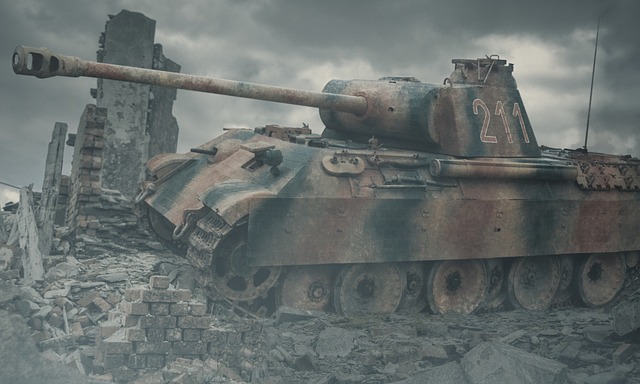
however, seeing hidden covered rows of tanks
- Tigers and Panthers. They were the best
tanks, but had no gas.
What Forces opposed your lines –
American, British, Canadian? Who did you
fight against?
I remember the Americans. They would come up
at night and try to blow up the bunkers or
the lines. We would turn the MG-34 on them
and they would go away. Then it would be
quiet for a while.
Describe the Bunker you were in.
It was big. It was connected by trench to
the Command Bunker. Some bunkers were
connected by tunnel. There was a telephone
connecting us to the Command Bunker that
could connect us to the other Bunkers as
well. Our Bunker had a tower with a mounted
MG-34 that could turn in 360’ degrees.
Good field of fire.
What weapons did you use?
Besides the MG-34 we were all issued with a
gehwer, Mauser k-98. We had a panzerschrek
in our bunker as well.
How often did you fire the k-98?
Not very much. We used the rifles sometimes
for hunting more than actual close combat.
Hunting deer? Tell me about that, please.
We used to go hunting after we did the
day’s drills and exercises. We would leave
the bunker to hunt sometimes, and this would
give us meat. Our bunker was pretty well
supplied with deer meat at that time. This
was in the forests away from most of the
fighting you read about. We were in a quiet
sector. The deer and animals would come into
our area to get away from the artillery and
fighting going on north of us.
How were the conditions inside the
bunker? What were the sleeping arrangements?
It was good. The bunker had sleeping
quarters for 10 men. Hammocks slung from
wall. We had running water, and an outhouse
out back. There was a wood stove we could
heat the water to wash, or cook on.
Didn’t you use esbit stoves to cook on?
We used the woodstove in the bunker if we
were going to cook.
How did you get your meals?
I was the one who went to the Command Bunker
everyday to bring back the rations (soup or
stew) and bread. I carried it (marmite can)
on my back, like a rucksack. That was our
rations for the day. Anything else we
supplemented from our own stocks and we
shared together. There was a farm nearby,
close to our bunker in the woods, and we
used to go milk the cow and bring some back
for us. I don’t remember the farmer
getting mad at us, we certainly did it!
You got along okay with the locals then?
Did you do any business with them?
Oh sure, they were no problem to us and we
got along fine. We bought what we could from
them.
Did you have a radio to listen to? What
did you do for entertainment? Did you play
cards?
No, we didn’t have a radio. Sure, we
played cards when we could. We did play Skat,
yes.
Did you have time for “Putz und
Flickstunde”?
Naturally, some of that, yes.
What did you wear for headgear? Did you
wear the feldmutze or stahlhelm?
We wore the stahlhelm, of course. I also
wore the Schiff.
Did you wear your ID disc in a leather
pouch?
I wore the erkunngsmarke all the time, but
don’t remember any leather pouch
How about the soldbuch? That was on your
person all the time. Where did you carry it?
Yes, had it on me always. In my tunic
pocket.
Did you wear socks or Flusslappen?
We wore socks. [Josef was surprised to
hear the term again, and then demonstrated
how a Flusslapen is worn by standing on a
dishtowel and wrapping it around the foot up
by the ankle]
Did you wear winter felt boots? Do you
remember what winter clothing you were
issued?
We didn’t have felt boots. We had jack
boots. We were issued the regular wool
uniform, and we had gloves. I did have a
leather sheepskin jacket, though. That was
plenty warm.
It was winter time when you saw action,
could you describe that?
When we were in the bunkers at night we
could hear the Americans approach our
positions, then we’d let them have it with
the MG-34. Shoot over their heads, it made a
lot of noise and kept them away. Then
sometimes we would be shelled with artillery
which would be bad. You had to get down in
the bunker right away!
Were you under attack from the air?
A Sure, the Jabos would come down low - so
low to the ground! - and shoot everything
that moves. Trucks, trains, cars. I came
under attack from one when I was pedaling on
bicycle! I foolishly dove under a plane
during the attack! Luckily wasn’t hit. The
Jabos were the most dangerous to us.
Were
you ever wounded?
No
Did your Unit have a Sani, a Medic?
We didn’t have one, but a member of the
Unit was a medical student so we went to him
if we needed to.
Did you remember there being a Chaplain,
a Kriegspfarrar visiting your Unit?
Never saw one.
How did things end for you? When did your
Combat days come to an end?
Near the end of February 1945 we were in a
village on our side of the Rhine. The US
Army was shelling the village we were in. We
were in the cellar of a house off the
square. Most houses had soldiers in the
cellars. During a lull the woman of the
house went to the well to get water, and the
Americans came up to her and told her to
have any soldiers to come out and throw down
their weapons and surrender. She came and
told us this, and we thought it best to do
it now. An SS man was in our company, and
grew angry at us we were giving up. He
stayed down there and never saw him again.
The rest of us came up and went out the door
and surrendered to the Americans. I pulled
the MG-34 and the other weapons in a wagon,
and gave the handle to one of the US
soldiers, all waiting for us. We were moved
down the road under guard. That was it for
me. Kaput.
|